Guide
Face sunscreen for South African sun: what to buy and how to use it
Use a broad-spectrum SPF 30 or higher every morning, and go SPF 50 if you're fair, outdoors a lot, or on retinol. Most people apply less than they need, so the amount you use matters more than the brand.
Why South African sun needs more care
CANSA says South Africa has one of the highest monitored UV levels in the world, and one of the highest skin cancer rates as a result.[1] The UV index scale treats 11 or more as "extreme".[2] Johannesburg sits at 1,753 m, and its summer UV readings often reach 14 to 16 because of that altitude.[3]
Cloud doesn't switch it off. CANSA points out that UV reflects off surfaces and can burn you on overcast days, and that sunburn can start within 15 minutes.[1] If you commute in a car with the window down or sit next to an office window, you're getting a dose too.
What SPF number should you use?
The American Academy of Dermatology recommends broad-spectrum protection, SPF 30 or higher, and water resistance for time outdoors.[4] CANSA's guidance is SPF 20 to 50, moving to 30 to 50 if your skin is fair or very fair.[1]
Our take for daily face use in SA: SPF 50 with a PA rating of PA+++ or PA++++ if the product lists it. PA is the Asian label for UVA protection, and you'll see it on most Korean and Japanese sunscreens. European brands such as La Roche-Posay show UVA protection with a circled "UVA" logo instead.
Does SPF 50 really do more than SPF 30?
On paper the difference is small. In practice, people under-apply, and a higher SPF gives you some margin when you do. That's the main reason we lean to 50 for faces in summer.
How much sunscreen goes on your face?
The AAD says most adults need about 1 ounce (a shot glass) to cover exposed skin on the whole body.[5] For face and neck, the common rule is two finger-lengths: squeeze a line along your index and middle finger. It feels like a lot the first time. That's normal.
Apply it about 15 minutes before you go out, because that's how long it takes to start protecting you.[5] CANSA gives 20 minutes.[1] Either way, don't put it on in the parking lot.
When to reapply
Every two hours outdoors, and straight after swimming, sweating or towel-drying. Both CANSA and the AAD say the same thing here.[1][5] For an indoor office day, one morning layer is usually enough. Reapply before you walk to lunch or sit outside for a braai.
Over makeup, a sun stick or a mist is easier than lotion. Mists are hard to apply evenly, so treat them as a top-up, not your main layer.
Which sunscreen texture suits your skin?
| Skin | Look for | Example on this page |
|---|---|---|
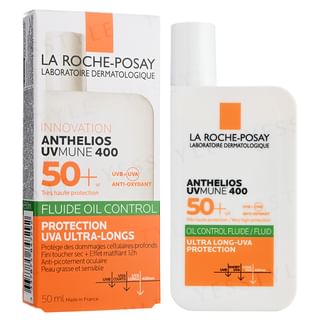
| Oily or acne-prone | Fluid or gel, "oil control", non-comedogenic | La Roche-Posay Anthelios Uvmune 400 Oil Control Fluid SPF 50+ (R419 at YesStyle) |
| Dry | Cream or "sun serum" with glycerin or ceramides | 23years Old N.m.f Moist Sun Serum Spf50+ Pa++++ 40ml (R537 at Jolse) |
| Medium to deep skin tone | Chemical filters or tinted, so there's no grey cast | Beauty of Joseon Relief Sun: Rice + Niacinamide (R193 at YesStyle) |
| Sensitive | Fragrance-free, fewer filters | Abib *renewal* Heartleaf Sun Essence Calming Drop 50ml (R347 at StyleKorean) |
Darker skin still needs sunscreen
CANSA is direct about this: darker skin has more melanin and lower melanoma risk, but everyone is at risk, and in people with darker skin most basal cell carcinomas still occur on sun-exposed skin.[1] Sunscreen also slows the dark marks that linger after breakouts, which is often the reason people with medium to deep skin start using it.
The practical problem is white cast. Mineral sunscreens with lots of zinc oxide can leave a grey film. Lightweight chemical-filter formulas, which most Korean sunscreens use, usually go on clear.
Buying sunscreen in South Africa
Local pharmacies stock La Roche-Posay, Eucerin, Bioderma and Nivea. Korean sunscreens are harder to find in shops, which is why many South Africans order them from YesStyle, Stylevana or StyleKorean. Those sites ship to SA, but shipping takes one to three weeks and you may pay import VAT and duties on arrival. Check the shipping line in your cart before you pay.
CANSA also notes that sunscreen usually expires about two years after manufacture, and that you shouldn't use an opened tube after a year.[1] Buying a 50 ml face sunscreen every two to three months is about right if you apply the full amount daily.
Chemical vs mineral sunscreen: which is better for SA?
Both work. Mineral (or "physical") sunscreens use zinc oxide or titanium dioxide. They suit very sensitive skin and children, but they can look chalky, especially on medium and deep skin. Chemical (or "organic") filters absorb UV and usually go on clear and thin. Most modern face sunscreens mix the two.
The AAD's position is simple: pick one that's broad-spectrum, SPF 30 or higher and water-resistant, and any of those will protect you if you use enough.[4] In practice, choose the texture you'll wear every day. A mineral formula that sits in a drawer protects nobody.
What does "broad-spectrum" mean?
It means the product protects against UVA as well as UVB.[4] SPF only measures UVB, which causes burning. UVA goes deeper, adds to ageing and dark spots, and passes through car and office windows. Look for "broad spectrum", a PA rating, or the circled UVA logo.
Sunscreen by region: coast vs Highveld
| Where | What changes | What to use |
|---|---|---|
| Johannesburg, Pretoria, Bloemfontein | Altitude raises UV; air is dry in winter | SPF 50, cream or serum texture from May to September |
| Durban and the KZN coast | Humid all year, sweating | Gel or fluid, water-resistant for the beach |
| Cape Town | Wind and reflected light from water and sand | Water-resistant SPF 50 for outdoors, reapply after swimming |
| Karoo and Northern Cape | Very high sun hours, dry heat | SPF 50, a hat, and reapplication every two hours outdoors |
Sunscreen and makeup: the order
Sunscreen goes last in your skincare and first before makeup. Let it set for a few minutes so foundation doesn't slide. If your sunscreen pills (rolls into little balls), you're probably using too much moisturiser under it or rubbing makeup on too soon. Pat foundation on rather than buffing hard.
Protection beyond sunscreen
CANSA recommends staying out of direct sun between 10am and 4pm where you can, wearing protective clothing and sunglasses, and avoiding sunbeds completely.[1] It also says that a first use of sunbeds before the age of 35 increases melanoma risk by 59%.[1] A wide-brimmed hat does more for your face than any extra SPF number.
Check your skin every month
CANSA suggests a monthly self-check, with someone else looking at your back and scalp, and seeing a doctor if a spot changes.[1] Watch for moles that are asymmetrical, have uneven borders, several colours, grow larger, or change over time. On darker skin, also check palms and the soles of your feet, where CANSA notes most melanomas in people with darker skin appear.[1]
Who should skip what
- Skip heavy creams if you break out along the jaw. Try a fluid.
- Skip fragrance if you've reacted to perfumed skincare before.
- Skip "SPF in foundation" as your only layer. You won't wear enough foundation to reach the SPF on the label.
- Babies under one year shouldn't be in direct sun at all, according to CANSA.[1] Ask a pharmacist about sunscreen for toddlers.
Pair your sunscreen with a routine that fits your skin type: oily skin, dry skin or acne-prone skin. If you're starting retinol, daily SPF stops being optional.
Quick answers
Do I need sunscreen in winter in South Africa?
Yes. UV is lower in winter but not zero, and CANSA lists 'the sun is only dangerous in summer' as a myth. A morning layer is enough for most indoor days.
Is SPF 30 enough for South Africa?
SPF 30 meets the AAD's minimum and sits inside CANSA's range. For faces in summer, or if you're fair or outdoors, SPF 50 gives more margin because most people under-apply.
How often should I reapply sunscreen?
Every two hours outdoors, and right after swimming, sweating or towel-drying.
Sources
- CANSA: Be SunSmart Everywhere
- Ultraviolet index scale (Wikipedia)
- Johannesburg climate table (Wikipedia, SAWS normals 1991–2020)
- American Academy of Dermatology: Sunscreen FAQs
- American Academy of Dermatology: How to apply sunscreen
Product links go to the retailer and may earn us a commission. Prices show the source and the date we checked them. Affiliate disclosure.
Products in this guide
YesStyle
La Roche-Posay Anthelios Uvmune 400 Oil Control Fluid SPF 50+
★★★★★ 4.4 (14 reviews on YesStyle)
R419
US$25.37 at YesStyle, checked 12 Oct 2026
Also at Takealot R399 (50 ml) · 12 Oct 2026
View at YesStyle
Jolse
23years Old N.m.f Moist Sun Serum Spf50+ Pa++++ 40ml
R537
US$32.50 in Jolse's Awin feed, 10 Jul 2026
View at Jolse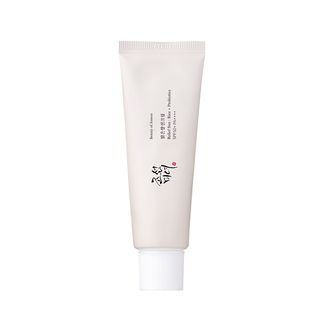
YesStyle
Beauty of Joseon Relief Sun: Rice + Niacinamide
★★★★★ 4.8 (28234 reviews on YesStyle)
R193
US$11.70 at YesStyle, checked 12 Oct 2026
View at YesStyle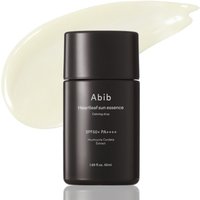
StyleKorean
Abib *renewal* Heartleaf Sun Essence Calming Drop 50ml
★★★★★ 4.7 (107 reviews on StyleKorean)
R347
US$21.00 in StyleKorean's Awin feed, 10 Jul 2026
View at StyleKorean
Stylevana
A'PIEU Pure Block Natural Daily Suncream Light SPF50+ PA++++ - 50ml
R123
US$7.43 in Stylevana's Awin feed, 10 Jul 2026
View at Stylevana
Stylevana
A'PIEU Pure Block Natural Water-Proof Sun Cream SPF50+ PA+++ - 50ml
R123
US$7.43 in Stylevana's Awin feed, 10 Jul 2026
View at Stylevana
StyleKorean
About Me Be Clean Tone Up Sun SPF50+ PA++++ 50ml
R132
US$8.00 in StyleKorean's Awin feed, 10 Jul 2026
View at StyleKorean
StyleKorean
A'Pieu Pure Block Aqua Sun Gel 50ml
★★★★★ 4.5 (135 reviews on StyleKorean)
R140
US$8.50 in StyleKorean's Awin feed, 10 Jul 2026
View at StyleKorean